New York is an amazing city and the city itself is a piece of art. The buildings such as a the Seagram building and the Chrysler building are mesmerising and while I was there I couldn't stop myself from constantly stopping in the street to take in the beautiful surroundings.
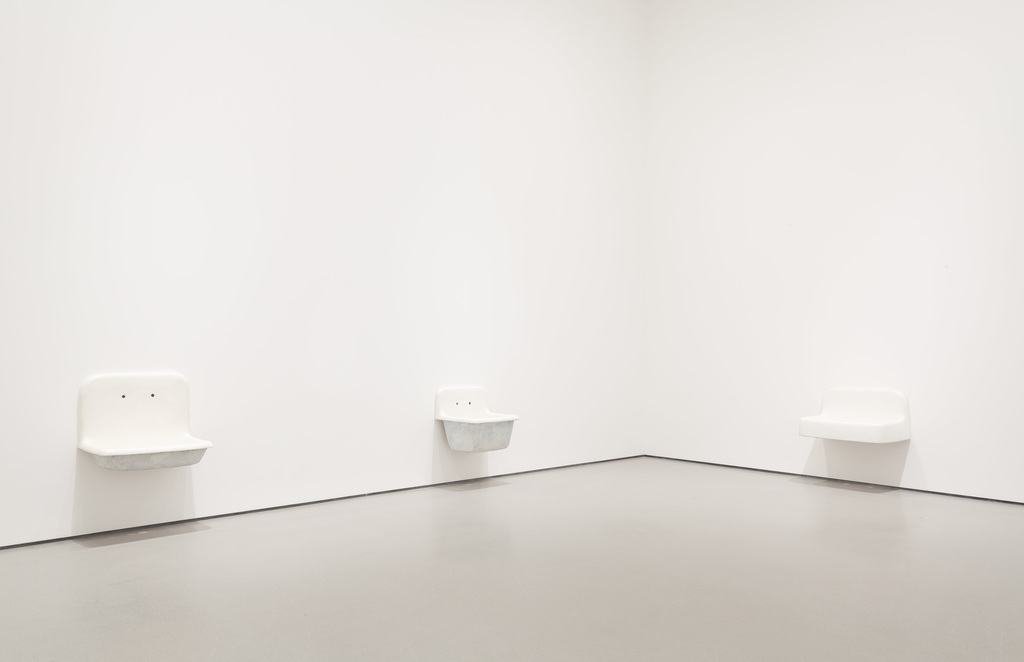 The first gallery I visited was the MOMA (museum of modern art). The MOMA has an amazing collection of art and it was a privilege to view so many famous and amazing pieces of art. The artist that stood out the most for me was an artist called Robert Gober. Gober's exhibition was called 'The Heart is not a metaphor'. This exhibition is the first large scale survey of Gober's career to take place in the United States. In Gober's early career he created deceptively simple sculptures of everyday objects. One of his most interesting sculpture compositions was created by sinks. Gober removed the taps of the sinks and attached them to the walls, this acted as a metaphor for the useless action of washing hands whilst there was an aids epidemic. His art deals with political and social issues which are fascinating. In the 1990's his practice evolved from single works to theatrical room-sized environments. The exhibition of work I views was a loosely chronological presentation which traces his body of work. The work highlights themes and motifs that emerged in the early 1980's.
  I also visited the MET (metropolitan museum of art) while I was in New York. The MET itself is a piece of beautiful architecture, and the roof garden installation on part of the roof of the building reveals some of the best views across the city and central park. The MET is filled with an almost overwhelming amount of art and artefacts. I took strong interest in a photographer named Thomas Struth. Struth is a German photographer who is best known for his family portraits. In the collection of Struth's work a variety I of his different pieces were shown. The collection of pieces explores the traditions and actual conditions of our world on the cusp of this newly global millennium. Struth's photographs deal with the truth and the relationship between mankind and machinery. Some of Struth's pictures are made in museums, he deliberately puts photography in a relationship with traditional art as he sets up a formal correspondence between them both. This is done by photographing the people who have come to view art. The picture displayed to your left is a photograph taken of a group of people looking at the sculpture Michelangelo's David. In this photograph we do not see the Renaissance masterpiece. Instead, Struth has chosen to focus his attention on the people gathered before the sculpture, an everyday and ordinary realm that typifies a predominant interest for photographers.
 At the MOMA I picked up a book on all the art that had been displayed there over the last few years including information about the artist. I am hoping as I read this I will come across artists which will help me progress with my project.
 |
| Henry Frick |

My time in New York was amazing and I loved soaking up the culture for the six days that I was there.

No comments:
Post a Comment